

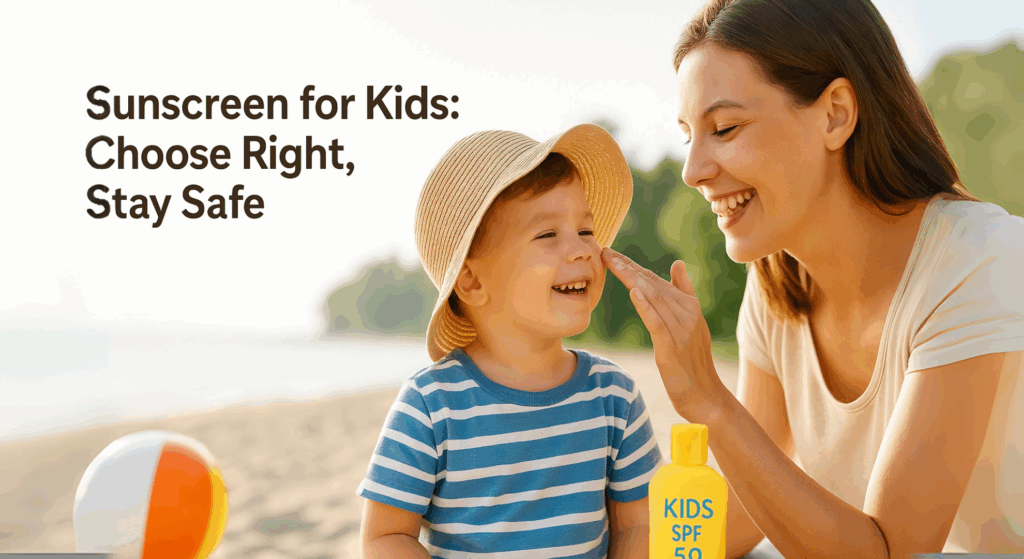
When it comes to protecting your child from the harsh effects of sun exposure, choosing the right sunscreen can make all the difference. With hundreds of products marketed as the “best sunscreen for kids,” it’s easy to feel overwhelmed. So how do you really know which sunscreen is safe and effective for your child’s delicate skin?
In this article, Dr. Shireen Marzouk, pediatrician, allergist, and mom, breaks down everything you need to know about choosing the best sunscreen for children — from what ingredients to look for, to application tips and special considerations for sensitive skin.
Why Sunscreen Is Crucial for Children
Children’s skin is not just smaller — it’s more sensitive and thinner than adult skin, making it much more vulnerable to UV damage. This means even short periods of sun exposure can lead to sunburn, inflammation, long-term skin damage, and even an increased risk of skin cancer later in life.
Moreover, pediatric skin has a less developed stratum corneum (outermost layer) and epidermis, which makes it less capable of protecting itself against environmental stressors like the sun.
✅ What to Look for in the Best Sunscreen for Kids
1. SPF 50+
While SPF 30 is generally considered the minimum, Dr. Marzouk recommends SPF 50 or higher for children, especially in sunny climates like the UAE.
2. Broad-Spectrum Protection
Look for sunscreens labeled “broad-spectrum” to ensure protection against both UVA and UVB rays. UVA contributes to skin aging, while UVB causes burns — both increase skin cancer risk.
3. Fragrance-Free and Scent-Free
Avoid added fragrances that may irritate sensitive skin. For children with eczema or dry skin, opt for completely unscented formulas.
4. Mineral-Based Over Chemical Sunscreens
Mineral (physical) sunscreens containing zinc oxide or titanium dioxide are safer and less irritating for young, sensitive skin. They also start working immediately upon application.
5. Thick, Creamy Texture
Choose thicker, paste-like sunscreens, especially for babies aged 6 months to 2 years. These types provide better coverage and longer-lasting protection.
👶 What About Babies Under 6 Months?
The American Academy of Pediatrics generally recommends avoiding sunscreen under 6 months and instead:
- Dress your baby in lightweight long-sleeved clothing
- Use wide-brimmed hats
- Keep your baby in the shade as much as possible
If absolutely necessary, a small amount of SPF 50+, fragrance-free sunscreen can be applied to exposed areas like hands and feet.
🧴 Sunscreen Application Tips for Kids
- Apply 15–30 minutes before sun exposure
- Reapply every 2 hours or immediately after swimming/sweating
- Don’t forget hidden areas: ears, back of the neck, tops of feet, and behind the knees
Bonus Tip:
For long outdoor days, try the Vaseline trick — apply sunscreen first, then a thin layer of Vaseline on top. It locks in the protection and minimizes reapplication needs during long hikes or beach days.
🔬 Watch for Allergic Reactions
If your child develops redness, itching, or hives within 2–3 hours of applying sunscreen, it may be a skin allergy or sensitivity. Switch to a hypoallergenic, dermatologist-recommended brand.
🌿 Be Careful with “Natural” Sunscreens
Even products marketed as “organic” or “natural” may contain essential oils like lavender or chamomile, which can trigger reactions in children with sensitive skin.
🏆 Dr. Shireen’s Recommended Sunscreen Brands
- La Roche-Posay Anthelios
- Bioderma Photoderm
Both offer SPF 50+ options that are suitable for sensitive skin and eczema-prone children. Don’t stress about labels like “baby” or “kids” — if the product is fragrance-free, broad-spectrum, and SPF 50+, it’s safe for everyone in the family.
Final Word
Choosing the right sunscreen for kids doesn’t have to be complicated. Follow these pediatrician-approved guidelines to keep your child safe, healthy, and sunburn-free this summer. Healthy skin starts with smart sun habits — and it begins with you.


